Superteach's Special Ed Spot: bloghop

Showing posts with label bloghop. Show all posts

Special Education BTS Blog Hop and Giveaways

A 20 PLUS teachers all giving away FREEBIES ! Click on this awesome ebook link below to look at the Back to School Tips Book. Included in the book on every page are links to freebies along with helpful tips to help you get started just right this coming school year.

One of the most important things you need at the beginning of every school year, especially in a special education classroom are schedules.
Schedule help students know what they are supposed to be doing, they help the class to flow better and often help make students, especially those on the Autism Spectrum feel more at ease know what they will next.
Not only are schedules good to use in the self-contained classroom but they are great to use in inclusion classroom as well.
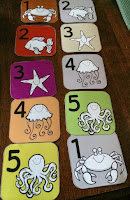
I have found schedules extremely useful in many types of classrooms and with many different types of students. Think about yourself or people you know. What would happen if they lost their planner or their phone with their schedule and calendar on it? Some of these people would be fine but others would be "lost", not knowing how to function without their phone and while most adults would not pitch a fit because they don't know their schedule or the next thing on their day, some would. Kids, especially those with disabilities find it hard
what they will do next, or get distracted after they have completed one task and do not know what to do. A schedule can keep them focused and on track.
Schedules can help can also help the child that has difficulty with unexpected changes in the regular schedule.  Using a schedule has also been shown to help increase independence! IF a student can tell from a schedule where he/she needs to be, then they will require less prompting from the adult.
So as you get ready to start another school year, think about schedules for your students and what type they may need. In the meantime click the schedule picture above  to pick up yours for a discounted price this week.

And to keep your summer going great, I'm having a giveaway of 3 products from my Teachers Pay Teachers store. Click on the Rafflecopter Giveaway below to enter for your chance at 3 FREE products

HOST GIVEAWAY
RAFFLECOPTER GIVEAWAY
a Rafflecopter giveaway


13

Bloghop Week 4 -5 Important Steps to Successfully Working with Paras


Paraprofessionals- where would we be without them in a special education classroom?
LOST- for sure as they can be our greatest resource for working with the children we do. Like every good relationship, it takes work. It takes training, teaching, love, compromise, feedback and good communication to run a room of students with disabilities and paraprofessionals as your right hand.

When I decided to move into teaching a self-contained Special Ed class, I was initially apprehensive about having to work with other adults in my room all the time. Prior to this I had only shared paraprofessionals when I taught resource classrooms.
 I have always known that my strength lay with working with children. But how would I do  working with adults too? Where do I start?  All I could think about was I can handle kids but how do I manage adults and be their friend and supervisor also?

One of the first places I decided to start  was to start was the same place I start for students.
 I knew I wanted to establish a good relationship with them and a safe and friendly environment for everyone to be in.  I wanted them to feel comfortable in the classroom. I wanted them to have a stake in how are kids performed. Here are some ideas in how I approach working with paraprofessionals.

Establish a relationship. Get to know the person.
I was very lucky in all the years I've worked in special education to have the advantage of knowing the person before I had to work with them in most cases but whether I knew the person or whether I was meeting them for the first time one of the first things I wanted to do was to get to know them better.
Share your story. What goals do you have for the classroom and the kids? Sometimes I did this in a casual way with just chatting with them in getting to know them other times I did this in a more formal way with a kind of get to
                                    know you form.
a.  Shoulder to shoulder, knee to knee chat ..well maybe not quite that close.
 Sometimes impromptu chats ended up being interrupted. I found it worked best if we set aside a time to chat and I shared that the goal of our chat would be for us to share with each other about our strengths and weaknesses and goals. Even for these chat, I would usually outline points I wanted to cover to make sure I asked about all the information I wanted.
 b.  Get Acquainted Form. Using a Get-to-know-your-form gave time to sit down at their convenience and reflect and give thoughtful answers. This usually gave me the most useful information and the information that they put on it could give me information about how they saw themselves what they felt their strengths and weaknesses were.  I also share an expectations list of things that are expected in their job, not only by me but in our Special Education department and school. If you would like a copy of the form and the expectations I used,you can get yours HERE.
Start with their strengths.  Everybody has strengths and weaknesses and paras are no different of course. When assigning tasks,  I selected an activity or task I knew would be an area of strength for them. Perhaps it would be something they shared with me they liked to do. The next thing I do is to look at where they think they are weak whether that is in things such as discipline, recording data,  in managing children with severe behavior issues, or changing diapers/pull ups. This might be something I observed or something they had shared with me was weakness.

Begin training immediately. 
One of the first areas I always share with paras, to begin training is the importance of confidentiality. Who we share information with and who we do NOT. The other important area to get to immediately is how to take data. Utilize all your resources at hand whether that is webinars videos one the one teaching training or even on the job training use your resources to give the information you need them to have.


Share Share Share
No, I don't mean share your toys like we tell students. Well...yes I do. Share your knowledge. Talk out loud. That may sound so funny to say, but how many teachers do so much  of their work mentally? I know that is the way I functioned at one time after spending some time teaching general education and having no paraprofessionals. I processed so much internally that I found I wasn't sharing with my paraprofessional partners enough.
Share your kids IEPs with the paras. Explain the goals and objectives. Share  the prompting levels, behavior plans, tokens systems because they are an integral part of your success and the success of your students.

Assess, reteach, adjust and GIVE FEEDBACK!
Give positive and constructive feedback. Set a time aside to give feedback and guidance to the paraprofessionals. We all like to hear whats going well. Share the good things you see. Share and reteach what isn't going as well. Adjust assigned tasks, students and classroom zones when needed.


Above all BE FLEXIBLE! But then with all we do in working with children with special needs - isn't that the name of that the name of the game?

Thanks for stopping by and keep on clicking through the Bloghop by clicking on the link below


7

BTS BLOGHOP #2


Hi Everybody! Welcome back to the week #2 of our Bloghop.
Join me and my fellow bloghop bloggers as we share tidbits and tips about  this week's topic: classroom setup.

Let me see-how many classrooms have I set up ? Well at least 37 times and that doesn't count the years when I may have had to move classrooms during the year.

Every year the end result is different since the classroom arrangement depends on the needs of the students and thats where I always start - the kids. Start with the information you obtained for schedule setup which was the subject of last week's bloghop. Use that information about the students's needs to determine what you need in a physical classroom setup. Which students will be able to work in whole group, small groups and which may need 1 to 1 instruction? This information will determine how many areas for small groups or individual areas you need to set up.

 Every August I  give up some of my summer to go into my classroom and get started with the physical setup of the room. The map, requested by the administration before we leave each year is never quite followed to my drawings, but in the end its okay. During the summer, my mind has kept whirling and whirling on how my room will need to be setup, and by the time I get there, I have changed it all around anyway- at least in mind - the easy part.

PHYSICAL SETUP

Here's where we start. a classroom with furniture everywhere.

1. Know your staff. How many people will be working in the room full time or part time.What are their strengths and weaknesses? For the last year and half I was lucky enough to have 2 full time paraprofessionals.
2. Know your students. Know THEIR needs. Do you have children with medical needs that need privacy for changing equipment or clothing? Do you have students that have special equipment? Wheelchairs, Rifton chairs? I work with students whose  disabilities range from Health Impairments, Intellectual Disabilities, Visual to Autism Spectrum Disorder in my self contained classroom.

If you are lucky enough to be a special education teacher, then you know that physical arrangement of the classroom can make so many facets of student life in the classroom much better, thereby making your life better as well.


In any classroom you want your physical environment to promote your educational goals as well as being a safe environment for all students. You want your classroom to function for all types of learning throughout the day whether its whole group, small group or independent work stations. In special education classroom you also want to consider a place for each adult, a calm down space and you want the furniture to "speak" as to what type of activity happens there.

When I setup my classroom, I want to establish areas for the following activities:

  1. Whole group area - a place your can gather the entire class. 
  2. Small group area- A section of the classroom devoted to meeting with 2 or 3 students at a time
  3. One-to one instruction area (depends on student need)
  4. Cool Down/calm down/fidget area
  5. Computer area
  6. An area for independent work tasks


The first thing I have to consider is my non-negotiables. What do I have that I cannot do anything about. 
My non-negotiables:
1. My computer area is a stationary counter with 4 counters on it. It is affixed to the wall so it stays where it is. 
2. In one corner of my classroom I have a smartboard mounted on the wall. So there needs to be room in front of that for the entire class to sit as well as being conducive for smaller groups. I have one area rug for my classroom. 
WHOLE GROUP
In the last few years, I have had 8 or fewer students so for whole group its been easy to use the students' desks in the center of the room for a whole group meeting area, call them to the rug in front of the smart board or use the kidney shaped tables. Whole group time is usually Morning meetings, P.M. meetings and sometimes social skills times.
SMALL GROUP
Small group areas: I use trapezoid tables and small rectangle tables for small group areas. When I have several children working on the same skill - I can pull them together easily. Sometimes this is at a trapezoid table  or small kidney shaped table. In either situation, I want to make sure when an adult if working with a group there, they are able to view the class and the students have their backs to the remainder of the classroom. This minimizes distractions. I use tables such as kidney shaped table for whole groups, but they can be used for smaller groups as well. 

ONE TO ONE INSTRUCTION AREA
Depending on the students I have that year, I may need to setup 1 to 1 teaching areas. IN the amp above, I really needed only one station for this as I had only 2 students needing this type of instruction. For this type of area I definitely want the student's back to the classroom so they can be totally focused on what is going on with the instructions. For this area I use 2 student desks face to face with chairs on either side.

COOL DOWN/CALM DOWN AREA
I apologize for the letters being lopsided. I seem to have lost my "after" picture for AFTER it was fixed. Below this wall display I had a small cubby table that contained a variety of fidgets. To the right of this display was a small room that student could use to select a fidget to take into the room and flop down on a beanbag for a little bit.


INDEPENDENT WORK TASKS
My independent work tasks are organized so they can fit into several sizes  plastic boxes I purchased from Really Good Stuff at http://www.reallygoodstuff.com/ . This is an awesome store if you haven't already discovered it. I found these plastic bins with handles that flipped up over the lid were very handy for storing. The handles kept the lid on and were not too hard for kids with motor deficiencies from opening and closing them. You can see them  at:
http://www.reallygoodstuff.com/classroom-organizing-center-plastic-storage-kit/p/160551/
My students had a schedule on the chalkboard indicating a number designating which task boxes they were to do that day or week.

Having a good physical setup of a classroom is one of the most important things you can do that can help you every day of the school year to come.


Please continue on our bloghop.


1

Fabulous February Bloghop and Alphabet Practice Cards

This year I have several students that have just can't grasp the alphabet.  They try their best and work their hardest.
All year I have struggled to keep them interested in the materials and have continually made different types of materials for them to use and practice on.
Each child learns a different way as we all know. Some learn visually others auditorily and then others need that kinethetic modality to learn materials best.

So when I am teaching those topics that just can't seem to be mastered, I turn my attention to how I can modify the materials to make them just a little bit different and perhaps help even one more student learn that crucial skill.

QUICK TIPS

I think one of the best things I have learned in teaching is to take a step back and look at what you can change. What can I do differently that may give that student the "leg up" to learning this skill. Be flexible and willing to change how you present things. In special education you may end up presenting the same concept to the same child over several years and having a multitude of ways for them to practice it will be a lifesaver.

Please click below and enjoy a trip to my TPT store where you can pick up today's FREEBIE for alphabet practice and matching upper and lowercase letters. This FREEBIE includes the entire alphabet and also has black/white worksheets plus color  sheets that can be cut apart to make activity cards. I hope you enjoy. Please leave feedback and check out the rest of the store.


3

WE ARE THANKFUL BLOGHOP

Reteach, reteach reteach

Lately I found that several of my kiddos have taken a back slide on alphabet letter recognition. This was  material we learned last year and reviewed at the beginning of this year, but as I am sure you have experienced, for one reason or another, we often find ourselves needing to reteach concepts.
Recently, I found myself in this position but felt I had exhausted my alphabet materials and needed something new to present these two precious girls with to help them regain this skill.
ALPHA CUPS provides the kids with extra ways to practice letter recognition.
Alpha cups originally began by mounting a capital letter on one cup and its matching lower case on another. Kids then match the letters and name them by stacking the like letters together, as seen below.
 These alpha cups are also good for working on sequencing of letters in the alphabet and can be grouped easily into whatever groups your students need extra help with. The pages can even be cut apart and placed on a file folder. Then students can match the letters and name them or even give the sound associated with the letter by matching them to the cards in the file folder.

 TIP: One of the greatest things that has helped me in my years of teaching is organization. Figure out your organization method from the start and stick to it. Perhaps you think best if things are organized by color; then organize your materials by color: Reading activities could be blue, math red and writing green. This makes materials easy to find in storage closets, makes them easy to use in the classroom and helps the students know which activities go with which subject.


To get this BLOGHOP FREEBIE, please click the image below.

ALPHA CUP FREEBIES


Thanks for checking in.  For more freebies and tips, continue the trip through the blog hop by checking out You Aut-a Know...just click the button below.
 You AUT-a Know!

5

WE LOVE SPECIAL EDUCATIORS!

I have teamed up with a great group of special educators!
Did we mention how much we love special educators??! 
Well just to show you how much, 24 of us have joined together to help you start your new year out with a BOOM! 
We are beyond excited and even more excited for you! Ok, maybe even just a wee bit jealous! :)
These 24 awesome special educators, including me, have put together 5 fabulous giveaways and a freebie hop with over 20 freebies just for you!! 
Shall we get this party going!!? 
Are you ready?
The first 3 giveaways are split into 3 categories; early childhood, primary, and intermediate! So be sure to enter the one for your grade level! You can click on any of the pictures to view the product in their store or to wishlist it in case you don't win!!{wink}
Here's a look at everything one teacher will win in the Early Childhood Pack!
WOW!
Here's a look at everything one teacher will win in the Primary Pack!
Seriously!!!!?? Are you feeling the Love?!
Here's a look at everything one teacher will win in the Intermediate Pack! As you know, it can be a challenge finding resources on TpT for this level, but we did manage to put a few things together that we think you'll love!
a Rafflecopter giveaway But wait! There's MORE! David at "Attainment Company" was generous enough to give two lucky teachers a copy of this e-Book for their iPad. (This e-Book is compatible ONLY for iPad, so if you do not have an iPad do not enter!)
a Rafflecopter giveaway How many of you have seen this book, or are even using it in your classroom to assess and determine presents levels?? Brigance CIBS
Last year a new and improved updated version was released...... Brigance CIBS II
and we're super excited that Robin at "Curriculum Associates" has generously donated it for us to give to one of you!! Folks, this is a $339.00 value!! Now this one definitely makes us just a wee bit jealous!  (Our apologies, but this one is for U.S. residents only) a Rafflecopter giveaway And now it's time for a............... FREEBIE HOP!

Unpack Pack-up Visual Cards
FREEBIE
Superteach's Special Ed Spot
Unpack/Pack up Visuals
2