Superteach's Special Ed Spot: social studies

Showing posts with label social studies. Show all posts

PUTTING PIZZAZZ IN YOUR SOCIAL STUDIES INSTRUCTION


I have used many curricula for teaching social studies in  special education and have found but just a few that really work for the students with significantly disabilities. So today I wanted to share some of the good ones I have used and then some other ideas from around the web. 

MEville to WEville by AbleNet is an excellent product for teaching some basic social studies skills such as character education, roles in the home and community, relationship building and social skills. It begins with teaching about self, extends to working on relationships and then emphasizes concepts about a persons role in the school community. While teaching these concepts they are still focusing on reading, listening, writing and speaking skills so its all integrated together.

One advantage to MEville to WEville is how adaptations and modifications are built into the program and materials.
Here is quick video by AbleNet about MEville to WEville.


Another idea for Social Studies content is Unique Learning System by News-2-You. (n2Y). I have to say, I love love love these materials. I love them AFTER I get them organized and preferably after someone else has paid for them. Unique Learning System encompasses all the subject areas and is already leveled for ........
ULS is now technologically integrated and can be used on iPads, Smartboards and Prometheus Boards. ULS contains worksheets, and has all the lesson plans written when you download it. 
Here is a link to some free webinars on their materials coming up in July.

FREE JULY WEBINARS
If you want more information on Unique Learning Systems, be sure to check out their website at 

Here are some other ideas from pinterest, blogs and stores you might like


Pam from Mrs. Ps Specialties has some great ideas about taking district curriculum and modifying and adapting it for our kids with special needs. She takes her materials and shows how to change them to work, but she explains it so well, you could do with yours easily. Take a look.


 ME ON A MAP

Here's an idea from Breezy Special Ed's Blog about U.S. History using Me on the Map project. She writes about working with high school kids but as an elementary teacher, I can see how this could be so easily adapted for lower grades and levels of functioning. 

 FREEBIE from Autism Classroom Resources

With July 4th coming up- if you are teaching ESY, this might be really helpful. This a Freebie from Christine at Autism Classroom Resources.


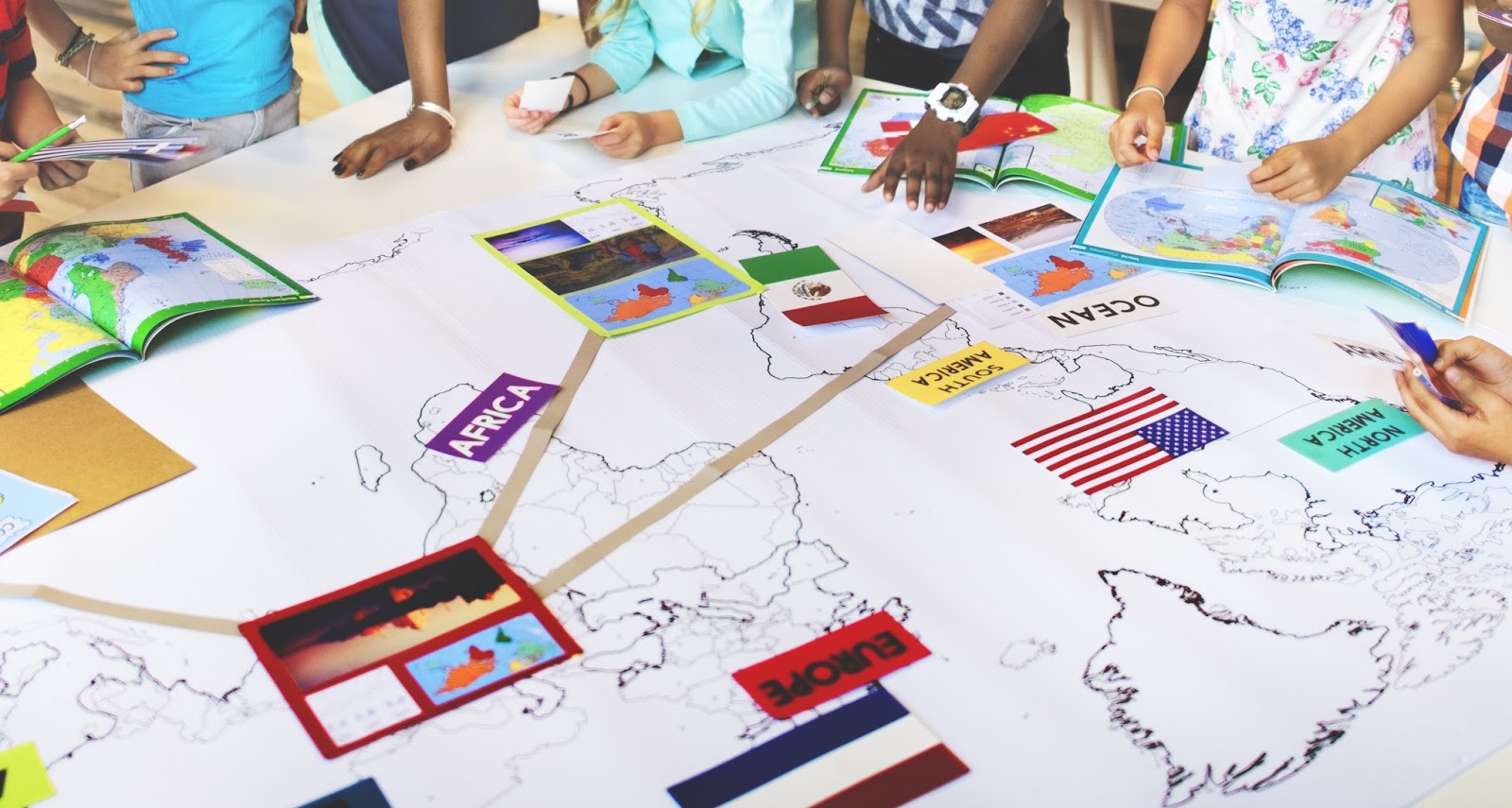
Here's a selection of country books that have very basic facts in them to acquaint students with the countries when working with geography. These books made teaching social studies for me so much easier as they condense the fact down to just simple information that I want my kids to know. 


Here is another set of adapted books that could work well for teaching information about people when want the kids to know about. Here's a great blog post from Alyssa at Simply Special Ed. 


Until Next Time....


105

BRINGING THE WORLD TO OUR STUDENTS


TEACHING THE WORLD THROUGH
SOCIAL STUDIES

I LOVE teaching Social Studies! I especially enjoy finding ways to make the historical part of it come alive for kids.  Teaching Social Studies to any elementary student can be challenging to make the facts and details of history become meaningful in today's world. Helping students with significant disabilities master these skills can often present  their own set of unique challenges when compared to other subjects. It is a subject that can seem unreal and complex to many students. What I try and do with Social Studies is to teach it subject in a simple, factual way so our students can comprehend it on their level with their disabilities.

Today, let's look at a few ideas that have worked in my classroom. Whether you work with students with disabilities in the general education setting or in the special education classroom with students that have more significant disabilities, making the concepts in Social Studies as real as possible is important.

 Do you work with students  with disabilities in the general education setting; modifying the curriculum to meet the needs of your students?
First you want to make certain you have considered the degree of  disabilities the students in your classroom have and how this will significantly impact  teaching the social studies concepts. Working with students in the general education classroom or in a classroom with students with significant disabilities is very different.  Here are just a couple of ways.

SOCIAL STUDIES TEXT

Social studies texts  can make it difficult to rely on them in teaching this subject.  The ones I have used; even those geared toward lower grade levels often presented information  at a much higher reading level than the grade for which they are intended. 

This makes it difficult for students without disabilities. Add to that, our students in special education that don't read on grade level even when looking at presenting it to students in general education classes with no disabilities. 

Many special education students receive their Social Studies instruction in the general education classroom with their peers. Others receive it in the special education classroom, but need to be working on similar concepts as their general education peers. Still other students receive social studies instruction in the special education classroom, but are working toward alternate standards and concepts. No matter where the instruction takes place, these ideas are for you!

Concepts in social studies often require higher level thinking skills to comprehend them.
How can we help our students with disabilities meet these challenges both in the general education classroom and in the special education classroom?

IDEAS FOR BRINGING THE WORLD TO OUR STUDENTS

Here are a couple of ideas.
Music -
Songs  are a spectacular way to teach concepts. I find that songs set to well-known tunes work particularly well. The kids usually already know the tune so we can concentrate on the content.
Because of the familiar tunes of these particular songs, I found it leaves student able to concentrate more on the words and any visual that you may use to help the students learn the materials. Here are a few of my favorites I have used in my classroom.
Here's a song I used to teach continents


Continents
Asia, 
Africa, 
Antarctica
Australia, 
Europe, too
North America
South America
Seven Continents for you!

Set to the tune of the well-know Pop Goes the Weasel, this song has just the facts I wanted to teach, a tune the students were familiar with and it quickly became one of the kids' favorites that at times, we even heard it being sung in our classroom bathroom.


Cinco de Mayo
Cinco de Mayo,
Cinco de Mayo,
The fifth of May,
The fifth of May
Is the anniversary
Of a great victory
For Mexico.
For Mexico
To the tune of Are You Sleeping, this is a very basic song about Cinco de Mayo, but depending your the level of your students, you are still teaching when it is and the country it is associated with.
Mnemonics
A mnemonic can be anything from an abbreviation, rhyme or even an image that can help you remember. We all know them and have probably used them from time to time. How do we remember the steps to use in long division? What about a mnemonic to remind us how to spell a word? ( i before e except after c) How do we remember how many days each month of the year has? (30 days hath September, April, June and November...) Have you used any of these? 

Here is one teaching the continents.

Eat An Apple As A Nightime Snack

The first letter of each word represents the name of a continent
Europe
Antarctica
Africa
Asia
Australia
North America
South America

There are so many ideas out there, I could go on forever. What are some of YOUR favorite ones to use?
We have a whole world of ideas and history to teach our kids. Find some song and rhymes that work for you and have fun!
0

IDEAS FOR TEACHING SOCIAL STUDIES CONCEPTS

Ideas for Teaching Social Studies Concepts


Social Studies baffled me for a while when I first entered the arena of teaching students with significant disabilities. How do I impart all these facts to these kids and get them to comprehend it? It took me a while but one day I stumbled upon these types of books. They were great for what I needed for my classes and I hope they help someone else.

Social Studies has so much factual information that is important. I love Social Studies, history, geography etc., but it involves so many facts.  That makes it difficult sometimes for anyone with poor memory skills to learn Social studies. 


Today I wanted to share with you a little bit about a way that has worked for me.

  1. Narrow the concept you want to teach to the very basic amount your student can successfully learn. If you are teaching facts about Abraham Lincoln or Martin Luther King pare down the facts to only the necessary ones. Use things such as interactive books and programs. 
  2. Use pictures whenever you can. This is especially helpful when students have limited reading skills. The pictures help to convey the information text does. 
  3. Make the information come alive or make it hands-on as much as possible. Can you make it into a role-playing activity? Can the students act out information with buddy help?

Today, I want to talk about interactive books. These great books can help focus on the information while still getting the facts. 

Below is an interactive book I created about Abraham Lincoln. It has pictures, picture word and word only visuals to match on the pages. This provides another way for the information you are teaching to be reinforced. 


This is an example of 2 pages from the Abraham Lincoln interactive book. The facts are limited to one basic fact per page and each page has a visual to use with it. The visual card is placed in the gray square at the bottom center of the page once the page has been read. 


The visual cards I use most often have 3 levels in order to accommodate different levels of differentiation.  
The 3 levels are:

PICTURE LEVEL

The picture visuals include exact pictures from the pages of the book as much as possible. This makes for an easier pairing of the card to the pages for the students. These work best for students without any reading skills but still have receptive skills. If the student needs a lot of supported help to learn or has significant reading issues, then I am only going to use the picture cards. 

PICTURE AND TEXT LEVEL

 If the student needs some supported help to learn but have some reading skills, then I am only going to use the picture/text cards.  I encourage the student to use the words but the picture cues are there to help convey what the page is about.


TEXT LEVEL

If the student is a somewhat stronger reader and can function without the pictures then that student can use the text-only cards. The text on the cards usually mimics the text from the book pages. The text in the books is kept to basic sight words as much as possible.


In working with these books first, I  take time to read these over with the students multiple times prior to using the visuals at all.
Next, we go through the book together and work with the book using the visuals.  Once I have taught the procedure for using the book I can see if the student through the book with me and point or match the visuals in the book. Can they match the picture cards on the visuals to the picture in the book?


Once the students can do the picture's visuals in the book and even during this process, I can frequently check to see what facts the student(s) are remembering from the book.


 Abraham LIncoln Interactive Books

Books such as these work great. I often laminated them and put them in books bins and reading corners for the kids to read and peruse themselves after we learned the materials. This helped with reinforcement of the materials as well. You can find this and other interactive books in my TpT store. 


0